

How to Gain More Space at Home Without Moving

A home can start to feel too small long before you need another bedroom. This is particularly noticeable in a city flat, where there may be no garage or dedicated storeroom for belongings you don't use on a regular basis.
Spain is projected to add approximately 3.7 million households between 2024 and 2039. In Madrid and Barcelona, the pressure on residential space is especially clear: 94 of the 100 neighbourhoods with the highest average monthly rent are in these two cities.
Moving to a larger home may solve a space problem, but it brings financial commitments that may not be affordable to those already paying expensive rental costs. This guide explains how to audit your rooms so you can declutter effectively, and compare external storage with the space and cost implications of moving.
Start by looking at how you use your space
Walk through your home one room at a time. Record how each room is currently used and what gets in the way. Instead of writing “the spare room is cluttered”, note that “six boxes, a folding table and two suitcases prevent the room from being used as an office”. Specific notes make it easier to decide what needs to change.
Use these questions for each room:
- Can the room be used for its intended purpose?
- Which items are used every day or every week?
- Which belongings are used only at certain times of year?
- Is the entrance hall being used for shoes, coats, bicycles or deliveries?
- Are belongings blocking a balcony, terrace or utility area?
- Could better shelving or cupboard organisation solve the problem?
Printable room-by-room space audit
Working through one room at a time keeps the task manageable and prevents belongings from simply being moved elsewhere. For each room, record its intended use, items that obstruct it, how often those items are used, and the action you will take: keep nearby, reorganise, sell, donate, recycle or store.
Measure large items and count boxes as you go. This gives you a clearer picture of the space you could recover and, if you decide to use storage, how much room you may need.

Making more space in Madrid and Barcelona
In Madrid and Barcelona, paying for a larger home can mean taking on a significant long-term cost simply to gain additional storage space. According to INE Urban Indicators 2026, 94 of the 100 Spanish neighbourhoods with the highest average monthly expenditure on rent for a main home were in these two cities.
Before considering a move, identify whether the problem is a genuine lack of everyday living space or an accumulation of belongings that are used only occasionally. If boxes, seasonal clothing, sports equipment or bulky household items are preventing you from using a bedroom, hallway or balcony properly, reorganising, decluttering or storing selected possessions elsewhere may recover the space you need.
Madrid: consider how storage would fit into your routine
Journeys across Madrid can vary considerably depending on the time of day, transport connections and whether you are travelling by car or public transport. A storage facility close to home is not necessarily the most convenient if it is difficult to reach, has limited loading space or requires a separate journey.
For belongings you need every month, look for a location that fits into a journey you already make, such as the route between home and work. For seasonal items that you may access only once or twice a year, a longer journey could be acceptable if the facility offers easier parking and loading.
Barcelona: balance proximity with ease of access
In Barcelona, the closest storage facility by distance may not provide the shortest or simplest journey. Traffic, one-way streets, parking restrictions and the location of loading areas can all affect how practical a visit will be.
If you expect to visit frequently, compare journey times from both home and work at the hours you are most likely to travel. If the unit will contain mainly seasonal or retained belongings, a location elsewhere in the city or the wider metropolitan area may be suitable, provided that the total journey and loading arrangements remain manageable.
Use a live route planner before choosing a facility. Include the time required to park, unload and reach the unit, rather than comparing distance alone.
Sort belongings by how often you use them
Once you have completed the audit, sort possessions according to access frequency. This is more practical than making a single decision about whether everything should stay or go.
Frequently used items
These may include everyday clothes, regularly used kitchen equipment, children’s school supplies or tools required for ongoing work. Keep them at home and easy to reach. Suitable shelving, drawer dividers or cupboard reorganisation may be enough.
Seasonal items
Examples include terrace furniture, holiday decorations, fans, heaters and out-of-season clothing. These are often suitable for storage because they remain unused for much of the year.
Retained or occasionally used items
Some possessions are worth keeping even when they are rarely used. A suitcase used several times a year may be better kept nearby, while camping equipment used once a year is a stronger candidate for external storage.
What to do with items you no longer need
Decluttering should come before choosing a storage unit. Paying to store unwanted belongings uses space and increases the amount you need to pack, transport and manage.
Divide unwanted items into three groups:
- Sell: Items in good condition that are likely to have worthwhile resale value.
- Donate: Usable possessions accepted by a charity or community organisation.
- Recycle or dispose: Damaged or unsuitable items that cannot be sold or donated.
Collection services, municipal recycling points and accepted items differ between Madrid and Barcelona and between surrounding municipalities. Check the relevant council guidance before arranging transport. Set a deadline, as bags marked for donation can become another source of clutter if left in the hallway.

Compare storage with the full cost of additional living space
Storage is not automatically cheaper than moving to a larger home. The answer depends on your current housing costs, local prices, the length of time you need more space and the volume you plan to store. The comparison is particularly relevant in Madrid and Barcelona, where rental expenditure is concentrated among Spain’s highest-cost neighbourhoods.
Costs linked to a larger home
Depending on whether you rent or own, include:
- higher monthly rent or mortgage payments;
- a larger rental deposit or a greater purchase contribution;
- estate-agent, administrative, tax, legal and removal costs where applicable;
- changes to commuting and regular travel costs;
- the time and disruption involved in finding and moving home; and
- potentially higher utility, furnishing and maintenance costs.
Some costs are one-off, while the price of paying for more residential floor area continues for as long as you occupy the property.
Costs linked to storage
Include the storage price and any applicable insurance or protection costs for the full expected period. Add vehicle hire, fuel, public transport, parking and the value of the time needed for each visit.
If an introductory offer is temporary, check the standard price after the promotion. Compare at least 12 months of costs, even if you initially expect to store for less time. This reveals how the decision changes if the arrangement lasts longer than planned.
Choose a storage unit based on what you will keep
Prepare a final inventory. Include the number of boxes, furniture dimensions and any awkwardly shaped equipment. Consider whether furniture can be safely dismantled and whether boxes can be stacked without damaging their contents. Leave an access route if you will need to retrieve items regularly.
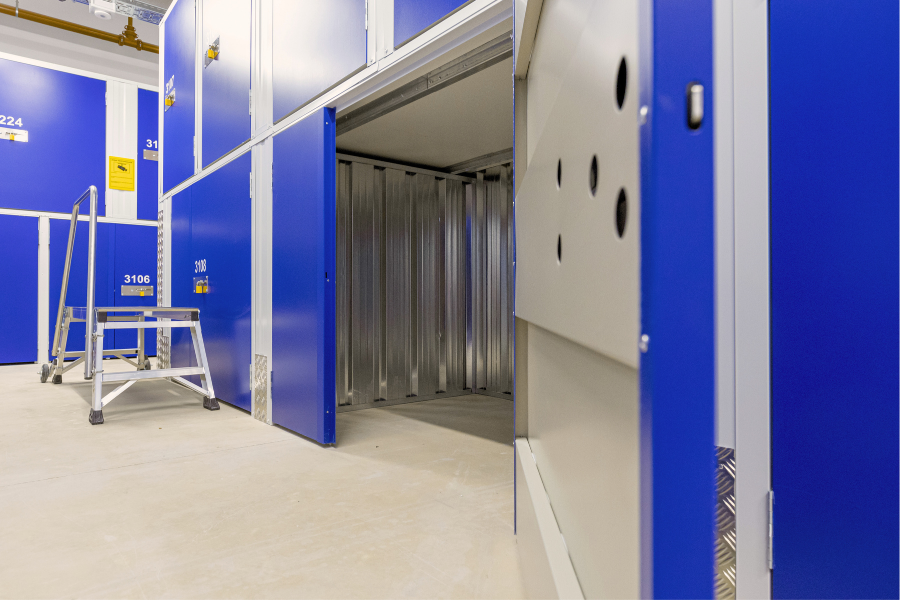
Compare unit size, journey time and access frequency
The lowest-priced unit is not always the most practical. Compare the amount of space you need with how often you expect to visit:
- Twice-yearly seasonal rotation: A longer journey may be manageable if you exchange belongings only in spring and autumn.
- Monthly access: Prioritise a centre that fits naturally into regular journeys from home, work or school.
- Frequent access: Check opening hours, entry arrangements, parking, loading access and the total door-to-unit time.
As a practical starting point, shortlist locations that usually take no more than 15 to 20 minutes for frequent visits, or up to around 30 to 45 minutes for seasonal access. These are planning guidelines, not guaranteed journey times. Check live conditions and test the route before booking.
Compare two suitable unit sizes with your provider. Ask about usable height, current availability, minimum term and access arrangements.
Review your storage after several months
Set a review date when you move belongings into storage. Three to six months is usually long enough to see whether the arrangement supports the way you use your home.
At the review, ask:
- Have you reclaimed the room or living area you needed?
- How often have you visited the unit?
- Are any stored items no longer worth keeping?
- Is the journey practical at the times you actually travel?
Remove items you no longer need and update the inventory. If substantial space remains unused, ask whether a smaller unit would be more suitable. This prevents a short-term arrangement from continuing without a clear purpose.
Create space before you consider a move
A larger home may still be the right choice if your household requires another bedroom or more space for daily life. If the main problem is rarely used possessions occupying useful areas, external storage may offer a more proportionate alternative.
Complete the room audit, remove what you no longer need and calculate the 12-month cost of each option. You will then be better placed to compare the cost and disruption of moving with the cost, travel requirements and limitations of storage. Once you know what you intend to keep, we can help you estimate a suitable unit size and find an OhMyBox! centre near you.

